Atlantic City Casinos Post Slight Revenue Gain but Profit Declines in 2025 as Bally's Logs Loss

Full-Year Figures Reveal Mixed Results for the Resort Town's Gaming Industry
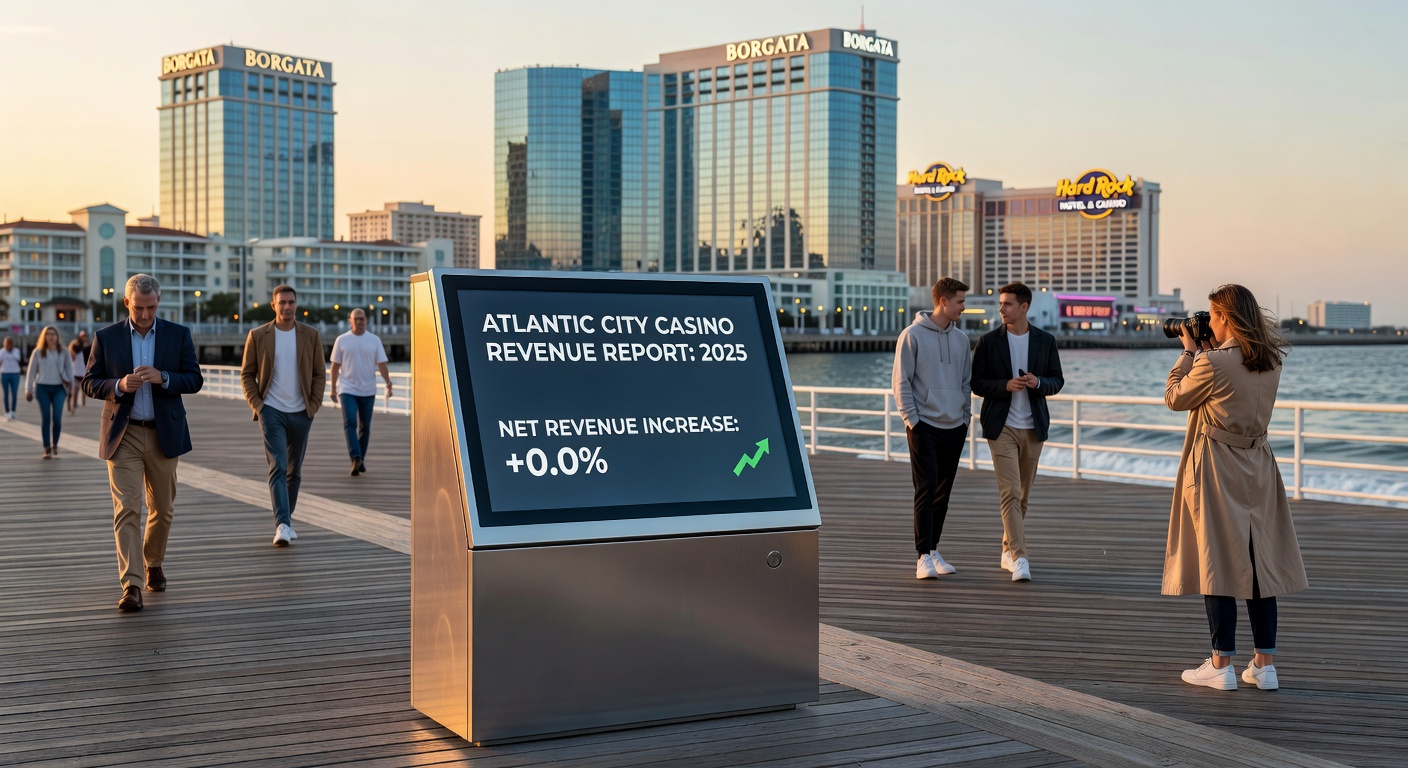
Atlantic City's nine casinos wrapped up 2025 with net revenue climbing a modest 0.6% to $3.24 billion, yet gross operating profits told a different story by dipping 1.4% to $665.42 million; those numbers, drawn from the state's latest 2025 Annual Casino Profit Data, underscore how inflationary pressures and intensifying competition from New York venues squeezed margins even as overall take-ins edged higher.
Observers note that such a split between revenue growth and profit contraction isn't uncommon in mature markets like New Jersey's, where costs for labor, energy, and supplies have ballooned while gamblers weigh options across state lines; data indicates total win—the raw amount before deductions—likely contributed to the revenue bump, but expenses eroded much of those gains, leaving operators to navigate tighter profitability.
What's interesting here is how the sector held steady on revenue after years of post-pandemic volatility; people who've tracked Atlantic City for decades remember sharper drops in prior years, so this 0.6% uptick signals resilience, although the profit slide reminds everyone that rising costs don't vanish overnight.
Bally's Stands Alone with Operating Loss While Borgata Dominates Profits
Bally's emerged as the outlier among the nine properties, posting the only gross operating loss of the year at $2.8 million, a stark contrast to the pack; Borgata, on the other hand, commanded the top spot with $237.4 million in profits, showcasing its enduring appeal as a high-roller draw on the Boardwalk.
Four other casinos joined the downward trend in profits: Caesars, Tropicana, Harrah's, and one additional unnamed operator saw declines, although exact figures for those properties remain detailed in the full report; the remaining casinos—likely including standouts like Hard Rock, Ocean, Golden Nugget, and Resorts—either held flat or posted gains, helping to buoy the aggregate total despite the headwinds.
- Bally's: Gross operating loss of $2.8 million—the lone red ink in a sea of black.
- Borgata: $237.4 million in profits, leading the market by a wide margin.
- Caesars, Tropicana, Harrah's: Notable profit declines amid broader cost pressures.
Take Bally's case; experts point to its ongoing renovations and softer slot performance as factors, while Borgata's strength stems from robust table games and non-gaming revenue streams like hotels and entertainment, which padded its bottom line; those who've studied individual property reports often find that diversified operations make all the difference when pure gaming win falters.
And yet, the reality is that even leaders like Borgata operate in a competitive ecosystem where every percentage point matters; data from prior years shows Borgata consistently capturing about a third of the market's profits, so its 2025 dominance aligns with patterns, but the overall 1.4% dip hints at challenges rippling across the board.
Inflation and New York Competition Squeeze Operators' Bottom Lines
Inflationary pressures hit Atlantic City hard in 2025, driving up costs for everything from utilities to staffing—think wages that outpaced revenue growth and supply chain hiccups that inflated food and beverage expenses; coupled with that, nearby New York casinos ramped up their pull, luring day-trippers and high-stakes players with aggressive promotions and easier access via bridges and tunnels.
Figures reveal how these forces played out: gross operating profit margins shrank as expenses climbed roughly in line with or above inflation rates hovering around 3-4% nationally; researchers who've dissected state gaming commission data note that New York's expanding footprint—now boasting over a dozen commercial casinos—siphoned an estimated share of regional spend, particularly from slots and sports betting.
But here's the thing; Atlantic City's unique beachfront vibe and live entertainment options kept revenue from tanking outright, so while profits fell 1.4%, net revenue's 0.6% rise shows gamblers still flocked to the Boardwalk, perhaps chasing the spectacle that upstate New York outlets can't fully replicate.
One study from industry analysts highlights a telling shift: regional visitation held steady, but average spend per visitor dipped slightly, as competition forced discounts and comps; those patterns echo across casino towns, where the writing's on the wall for operators slow to adapt.
New Jersey's Nine-Casino Market Grapples with Persistent Economic Headwinds
The data spotlights ongoing economic challenges for New Jersey's nine-casino market, now consolidated after closures like Revel and Showboat years back; with only these properties carrying the banner, any profit erosion amplifies pressure on jobs, taxes, and local tourism—revenues fund everything from beach replenishment to convention center upgrades.
Statewide, gaming taxes from Atlantic City topped $500 million in recent years (exact 2025 figures pending full breakdowns), yet the profit dip raises questions about sustainability; observers who've followed the market since the 1978 legalization know that competition from Pennsylvania and now New York has reshaped the landscape, turning what was once a monopoly into a regional battleground.
Now, as of April 2026, early quarterly reports suggest similar dynamics persisting into the new year; first-quarter data shows revenue stabilizing around $780 million seasonally adjusted, but costs remain elevated, with Bally's still working through turnaround efforts and Borgata defending its profit throne.
People often find that diversification helps—casinos leaning into online partners, sportsbooks, and events weather storms better; Hard Rock's concert series and Ocean's beach club expansions exemplify this, pulling crowds beyond traditional slots and tables.
That said, the ball's in the operators' court to innovate; whether through tech upgrades like cashless wagering or targeted marketing to counter New York, adaptation will dictate if 2026 flips the profit script.
Key Takeaways from the 2025 Performance
Breaking it down, net revenue's $3.24 billion marks a small win in a tough environment, fueled by steady slot play and sports betting growth; gross profits at $665.42 million reflect cost realities, with Bally's $2.8 million loss serving as a cautionary tale while Borgata's $237.4 million haul proves market leaders thrive.
Declines at Caesars, Tropicana, Harrah's, and another underscore vulnerability to external squeezes; inflation chewed into margins, and New York's casinos chipped away at the customer pool, yet the sector's nine properties demonstrated grit by avoiding steeper drops seen in leaner times.
There's this case from 2024 where comparable pressures led to a 2.5% profit fall, so 2025's milder 1.4% slide feels like progress; experts tracking these metrics anticipate that online integration—New Jersey's iGaming win hit record highs—will offset some land-based strains moving forward.
Conclusion
Atlantic City's 2025 casino results paint a picture of endurance amid adversity; with net revenue up 0.6% to $3.24 billion and profits down 1.4% to $665.42 million, the market absorbed inflation and New York rivalry without crumbling—Bally's lone loss at $2.8 million contrasts sharply with Borgata's $237.4 million profit crown, while decliners like Caesars, Tropicana, and Harrah's highlight pockets of pain.
As April 2026 unfolds, those trends linger, prompting operators to sharpen strategies in a nine-casino arena where every dollar counts; data from the year underscores that while challenges persist, the Board's enduring allure keeps the games rolling, setting the stage for potential rebounds if costs stabilize and innovation kicks in.